Linksys Max-stream Ac2600 Mu-mimo Smart Wi-fi Gigabit Router Ea8500 Review
Three years ago, Linksys launched their start MU-MIMO router with the Linksys EA8500 Max-Stream AC2600 MU-MIMO Gigabit Router.
Fast forward to today, Linksys launched their first DFS router with the Linksys EA8100 Max-Stream AC2600 MU-MIMO Gigabit Router. DFS stands for Dynamic Frequency Selection. More on that in the later on role of the review as that is the but selling betoken of this router.
EA8000 series has e'er been Linksys mid-tier routers targeted at the more upkeep conscious customers while at the same time delivering value for money performance.
The pattern for EA8100 is similar to that of the EA8500. Even the specs is similar with its 4×4 MU-MIMO and AC2600 (800 Mbps (2.iv GHz) + 1,733 Mbps (5 GHz)).
However, the processor on the EA8100 is slower, 880 MHz vs. 1.4 GHz and the RAM is lesser 256 MB vs. 512 MB. Not surprising, since Linksys release it using a lower model number.
Partnership With StarHub
EA8100 retails for S$329. But sadly, you cannot get it in whatsoever retail or online stores as it is exclusive to StarHub customers.
To get the router, you lot demand to sign up for, or renew your StarHub 1Gbps Fibre Home Broadband. The programme price Southward$39.90 per month, and you lot will become the EA8100 free of charge.
Unboxing
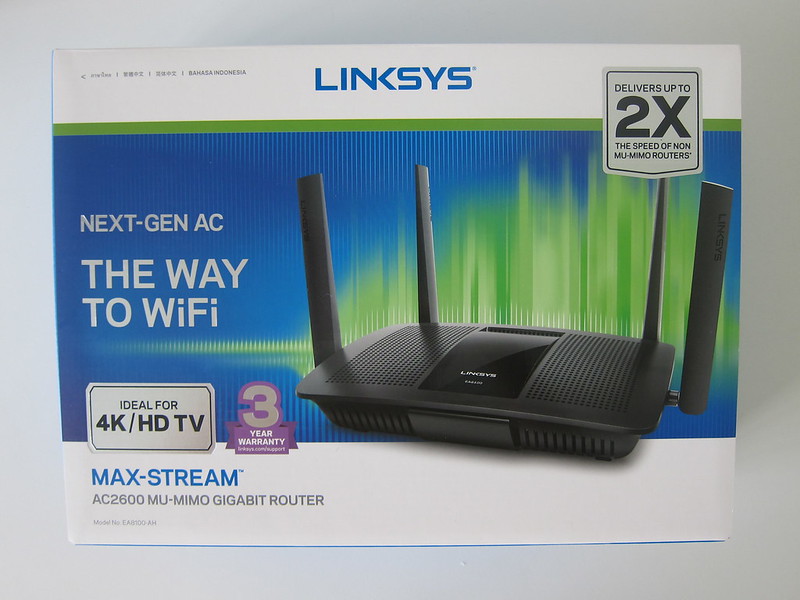
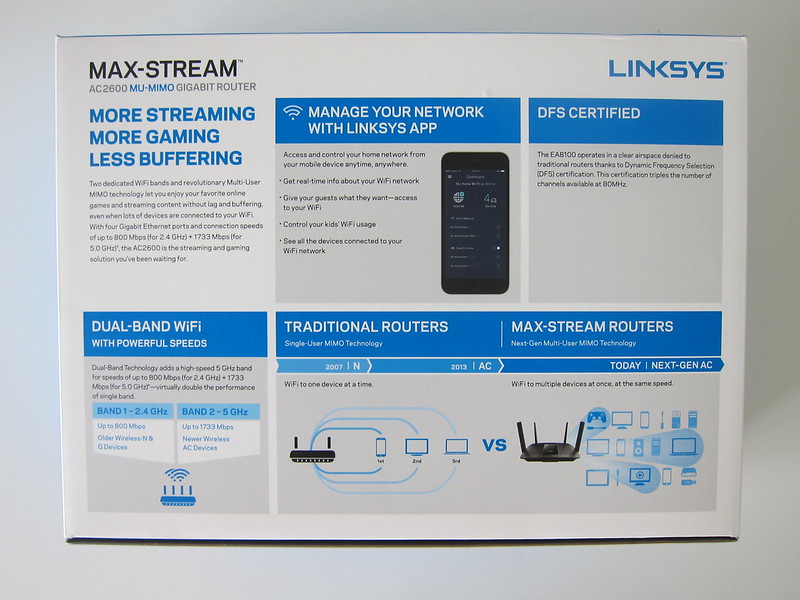
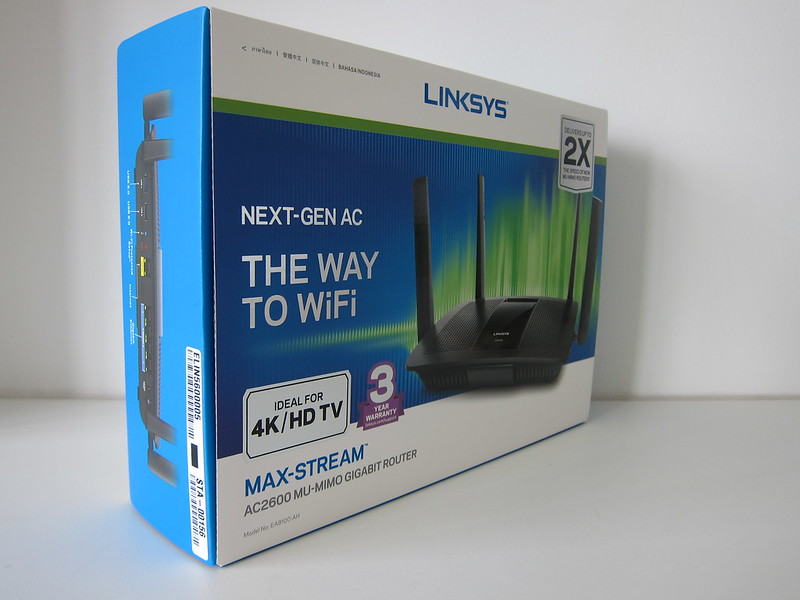
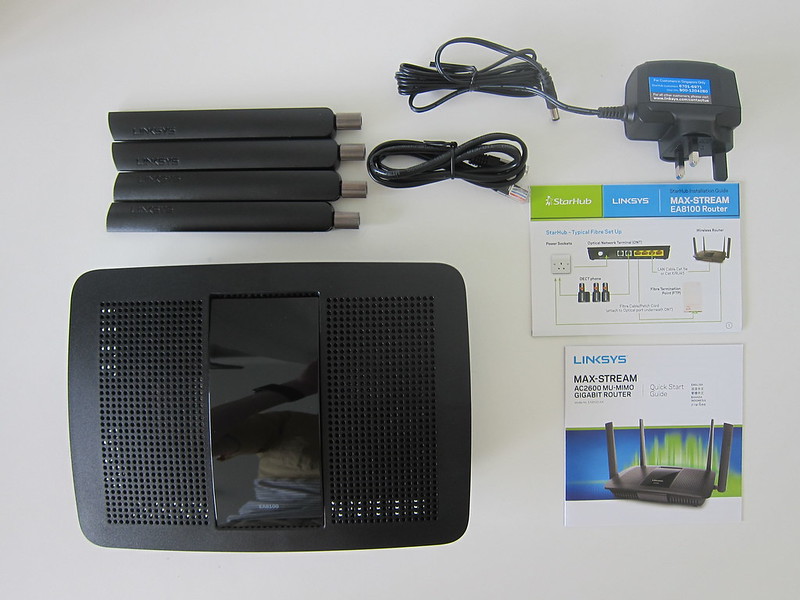
Specifications
- Processor: MediaTek MIPS1004kc Dual Core 880MHz
- RAM: 256MB DDR
- Wink: 128MB
- Wireless: 802.eleven a/b/g/n/ac wireless LAN
- 2.4GHz
- IEEE 802.11n, IEEE 802.11g, IEEE 802.11b
- Speeds upward to 800 Mbps
- 5GHz
- IEEE 802.11ac, IEEE 802.11n & IEEE 802.11a
- Speeds upward to 1733 Mbps
- 2.4GHz
- LAN/WAN
- 4x ten/100/1000 Gigabit LAN ports
- 1x 10/100/1000 Gigabit WAN port
- Antennas: Four exchangeable external antennas
- Other Ports: 1x USB three.0 port, 1x USB 2.0 Port
- Dimensions (50 x W x D): 257 10 184 x 56 (mm)
- Weight: 558 g (Without Antennas)
Design
As mentioned earlier, the design of the EA8100 is similar to that of the EA8500. The difference lies in the port design.
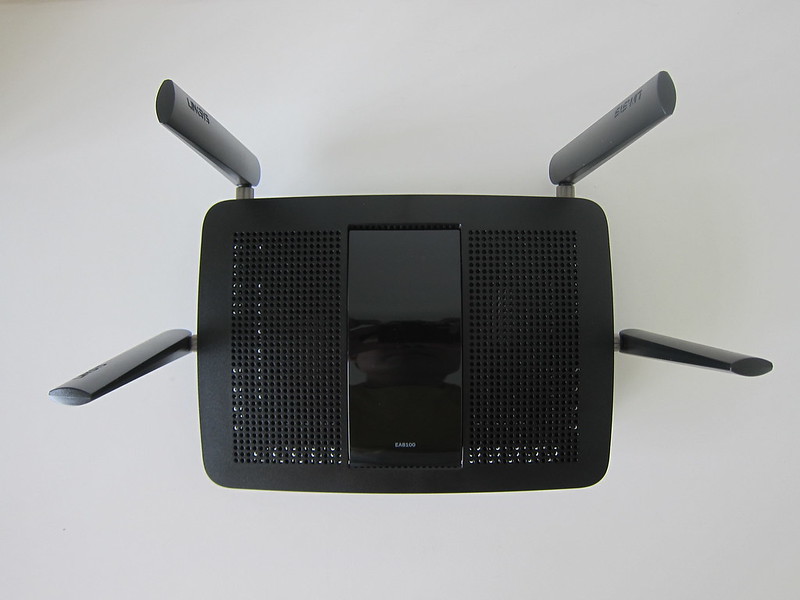
For EA8100, the eSATA and wi-fi on/off push have been dropped which make sense in the current age. The Internet port has likewise been separated from the 4 LAN ports and moved to the left for better visual clarity.
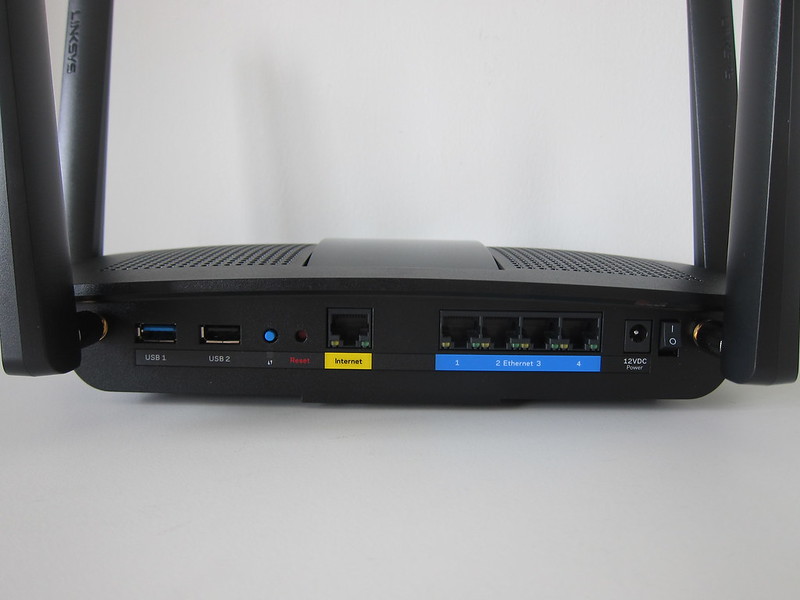
- USB 3.0 Port
- USB two.0 Port
- WPS Push
- Factory Reset Button
- Internet WAN Port
- 4x LAN Ports
- Power Port
- Power On/Off Switch
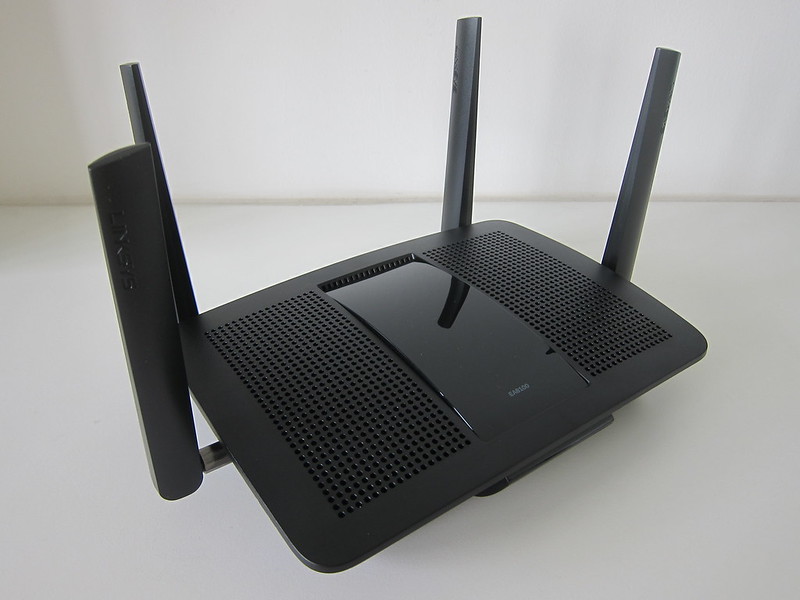
Since it features a four×four MU-MIMO, information technology has four antennas. Ii at the back and one on each side.
The weight and dimensions of the EA8100 are the aforementioned as EA8500. Measuring 257 x 184 x 56 (mm) and weighing 558 thousand without antennas.
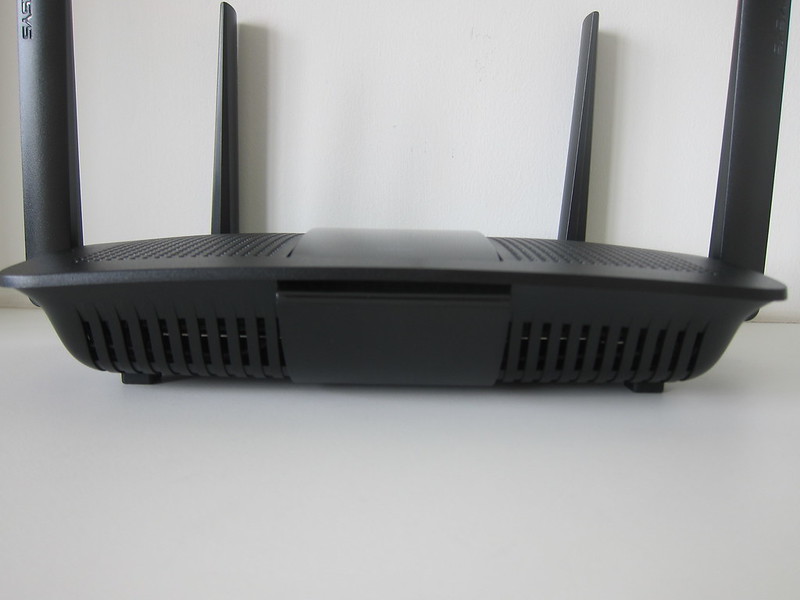
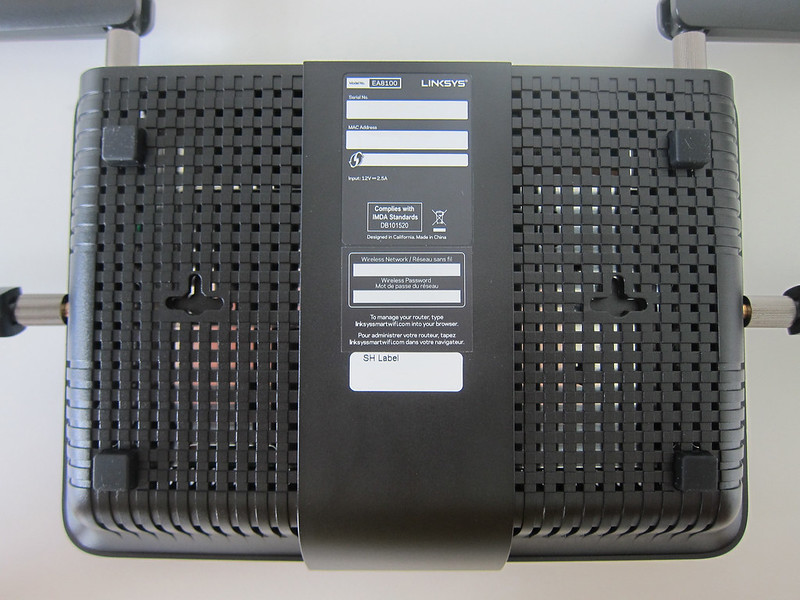
It is sectional to StarHub, and hence y'all tin can find a StarHub series number label at the lesser of the router.
Features
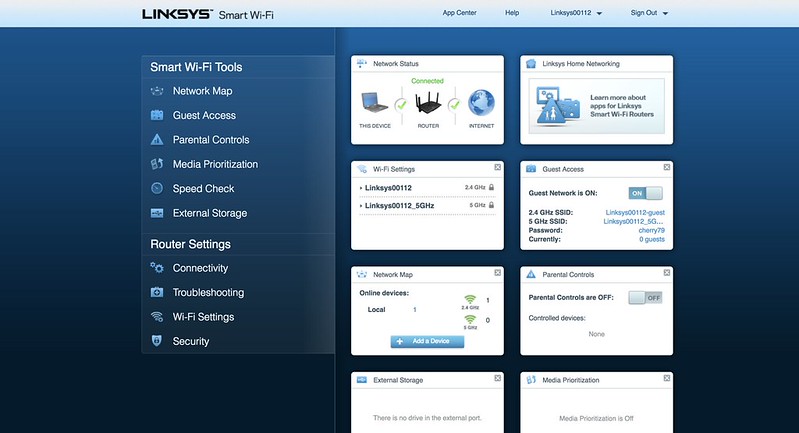
The EA8100 is a smart router every bit well, and hence you lot can access your router settings remotely over the Internet using the Linksys Smart Wi-Fi website (linksyssmartwifi.com) or Linksys mobile app available on both iOS and Android.
Similar most Linksys routers, it also supports beamforming. Beamforming enables the router to identify and connect directly with the devices rather than merely sending out wireless signals in a general direction. This ensures faster network speeds, ameliorate wireless range, reduced interference from other devices, and stronger Wi-Fi connections.
EA8100 supports 4×4 MU-MIMO. MU-MIMO stands for Multi-User, Multiple-Input, Multiple-Output. The router can transport and receive upward to four streams of data using multiple antennas to multiple clients simultaneously. Of course, the client itself must support MU-MIMO. Most modern Qualcomm Snapdragon processors found in mobile phones back up MU-MIMO.
There is no OpenVPN Server back up on the EA8100. Information technology seems that OpenVPN Server is only supported in WRT series, in detail, the WRT3200ACM, WRT1900AC, WRT1900ACS, and WRT1200AC.
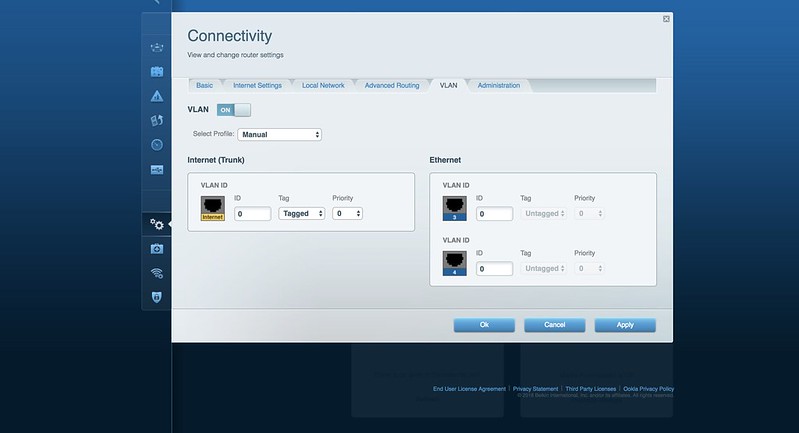
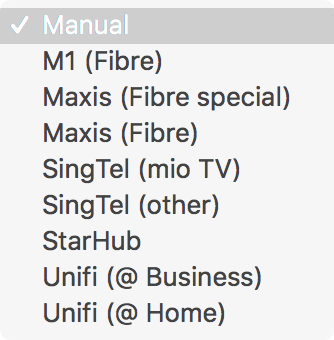
VLAN tagging is available in EA8100. Despite it being exclusive to StarHub, in that location are presets for other Singapore Internet service provider VLAN tags likewise.
DFS
DFS stands for Dynamic Frequency Choice. DFS is created to solve the problem of interference and airspace congestion from different routers operating in HDBs or high-rise condominiums. It solves the problem by expanding the number of available wi-fi channels of the v GHz band from nine to 25.
The EA8100 is probably the get-go and only router right now to support DFS. The reason being it requires more stringent approval from the authorities due to the utilise of restricted frequencies. The use of frequency throughout the world is govern by the ITU Telecommunication Standardization Sector.
How it works is pretty uncomplicated. You tin can refer to the graph beneath for a rough idea.
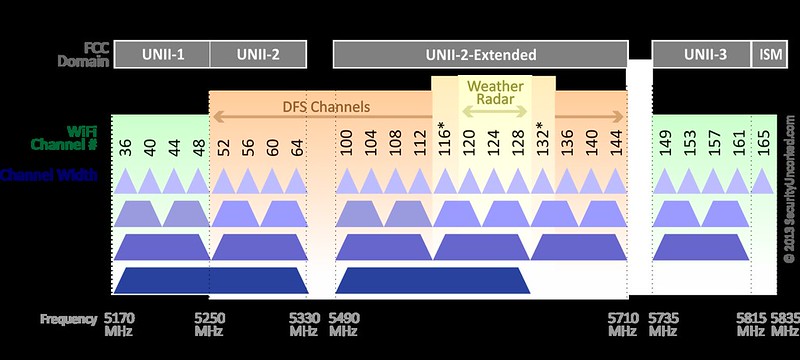
Right now, your router 5 GHz band uses one of the nine public channels marked in green (36, xl, 44, 48, 149, 153, 157, 161, and 165).
The 16 DFS channels marked in orange are restricted channels reserved by the government for the military, emergencies services, and weather radar. Out of the 16 channels, we can simply use 15 of them (52, 56, 60, 64, 100, 104, 108, 112, 116, 120, 124, 128, 132, 136, and 140). Channel 144 can't be used because older 802.11ac devices don't support it and several worldwide regulatory prohibit the use of that channel.
You must be wondering if information technology is restricted, how come the EA8100 can utilise information technology? The answer lies in the DFS technology.
Past default, when you lot set the router, it uses the DFS Channel 108. In the groundwork, the router is actively listening for any military machine, emergencies services, and weather radar that is using the same frequency. If there is an airplane flew by your house and broadcast the aqueduct 108 frequency, your router will admit it and back off from the channel by switching to a random non-DFS aqueduct.
During this aqueduct switch, you lot will see a short disconnection on the v GHz ring. You will not experience whatever deviation as it happens within a spilt-second.
The disconnection when switching from not-DFS channel to DFS channel is longer because the router needs to scan the radio environment whether the selected DFS channel is being occupied by the radar. The scanning could accept up to ten minutes.
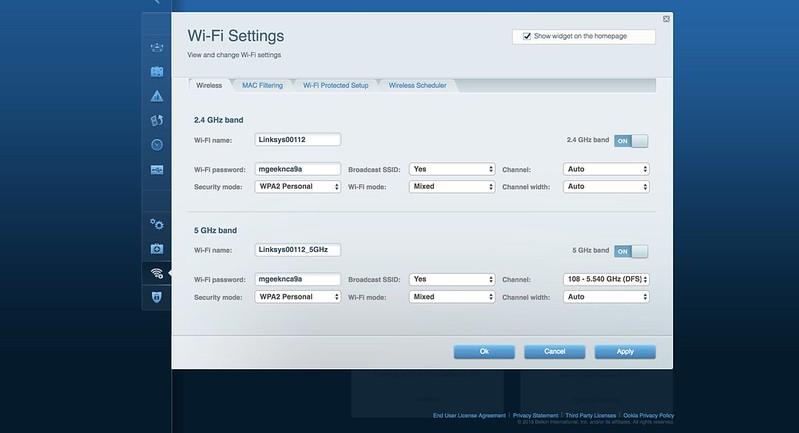
Information technology will stay on the non-DFS channel till yous explicitly switch information technology dorsum in the settings. It volition not automatically switch back because that involves dropping your connections and restarting your router. In Linksys betoken of view, that is deemed poor user feel, and hence they decided not to switch it back automatically.
There might be cases where yous thought yous are on a DFS channel, but actually, you are not. The router probably switches to a non-DFS channel while you are away as the DFS aqueduct might exist in utilise.
I wish Linksys will inform you via a button notification on the Linksys app or via an email when that happens. At least you know you lot have to switch information technology dorsum, rather than keep checking the wi-fi settings page every twenty-four hours.
In your router admin UI, the "car" pick in the v GHz channel settings doesn't include DFS channels. The router will but automatically select the best non-DFS channel. There is no automobile selection for DFS channels yet due to technical limitations of the chipset.
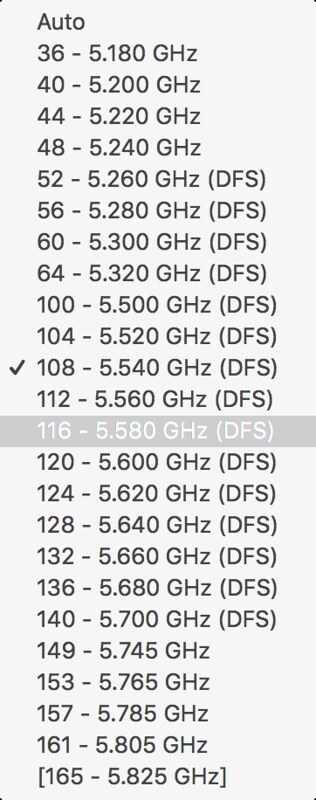
For now, y'all can select whatever arbitrary DFS channel. If you observe that your router keeps switching back to a non-DFS channel, yous might need to choose some other ane as your house might be near an airbase or a weather station which always broadcast the same DFS frequencies.
Speed Test
I live in a new HDB BTO flat. And like well-nigh new BTO flats, they are all built using prefabrication techniques. I call back the walls of prefabrication flats are much thicker than older apartments and hence I exercise not get much congestion on both the ii.4 GHz and 5.0 GHz bands from my neighbors. And therefore, DFS doesn't make much of a departure to me.
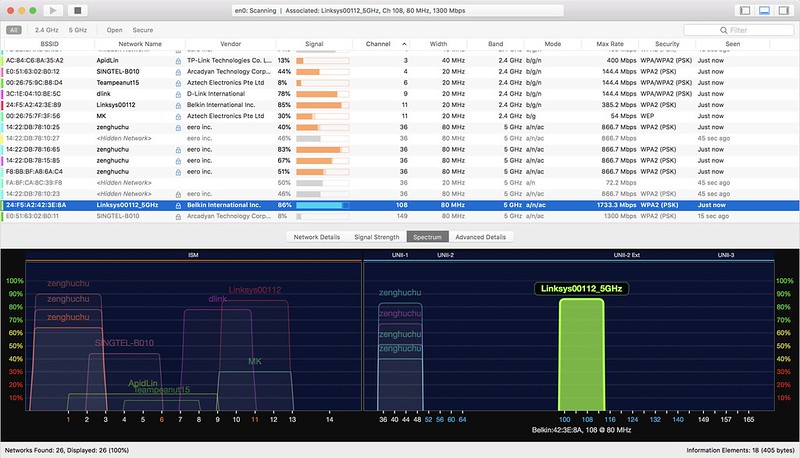
However, if y'all live in an older HDB flat (which I assume the walls are thinner), you might get congestion on the v GHz band due to all your neighbors' routers. Likely those routers volition just be using one of the nine public channels. So, if your router supports DFS, your 5 GHz ring will non be "squeezing" with the public channels, and hence you will become much faster speeds.
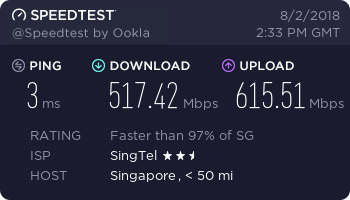
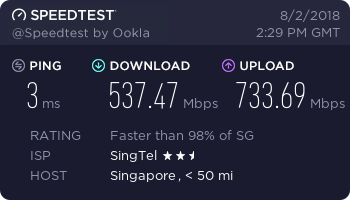
Using DFS channel, the simply speed improvement I get is for uploading speed. The speed divergence is more than 100 Mbps everytime I test information technology with Speed Test. Downloading speed remains nearly the same.
Decision
I can't seem to call up of whatever disadvantages for DFS. Information technology doesn't require explicit support on the customer side, unlike MU-MIMO. As long equally the customer can connect to the 802.11ac network, it will support DFS channel frequencies.
I foresee future Linksys routers will back up DFS, like how the EA8500 is the first router to support MU-MIMO and after that, you can observe MU-MIMO in near all Linksys routers.
Hopefully, by then, it will no longer exist exclusive. No one switches an Isp only to get an exclusive router, though the aforementioned can't be said for mobile phones.
Source: https://lesterchan.net/blog/2018/08/08/linksys-ea8100-max-stream-ac2600-mu-mimo-gigabit-router-review/
0 Response to "Linksys Max-stream Ac2600 Mu-mimo Smart Wi-fi Gigabit Router Ea8500 Review"
Post a Comment